 Symp Trac
Track your symptoms. Keep your data.
Symp Trac is a calm, private symptom tracker for chronic illness: log pain, fatigue, mood or any of ~170 metrics in seconds, see a month of patterns on one screen, and walk into appointments with a doctor-ready report — while everything stays on your phone.
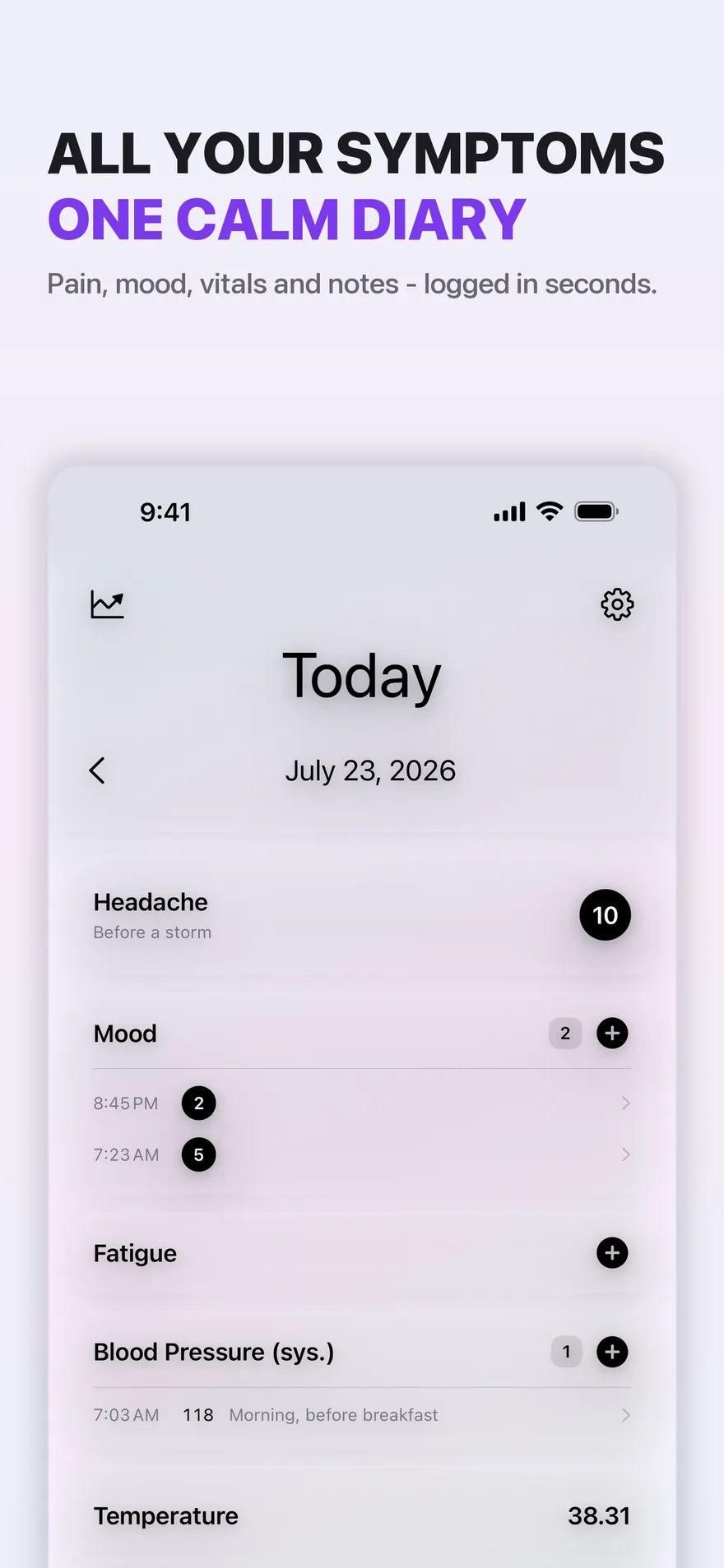
Made for long-running conditions
Migraine, fibromyalgia, IBS, endometriosis, POTS, long COVID — when a condition stays for months, the diary has to be effortless and honest.
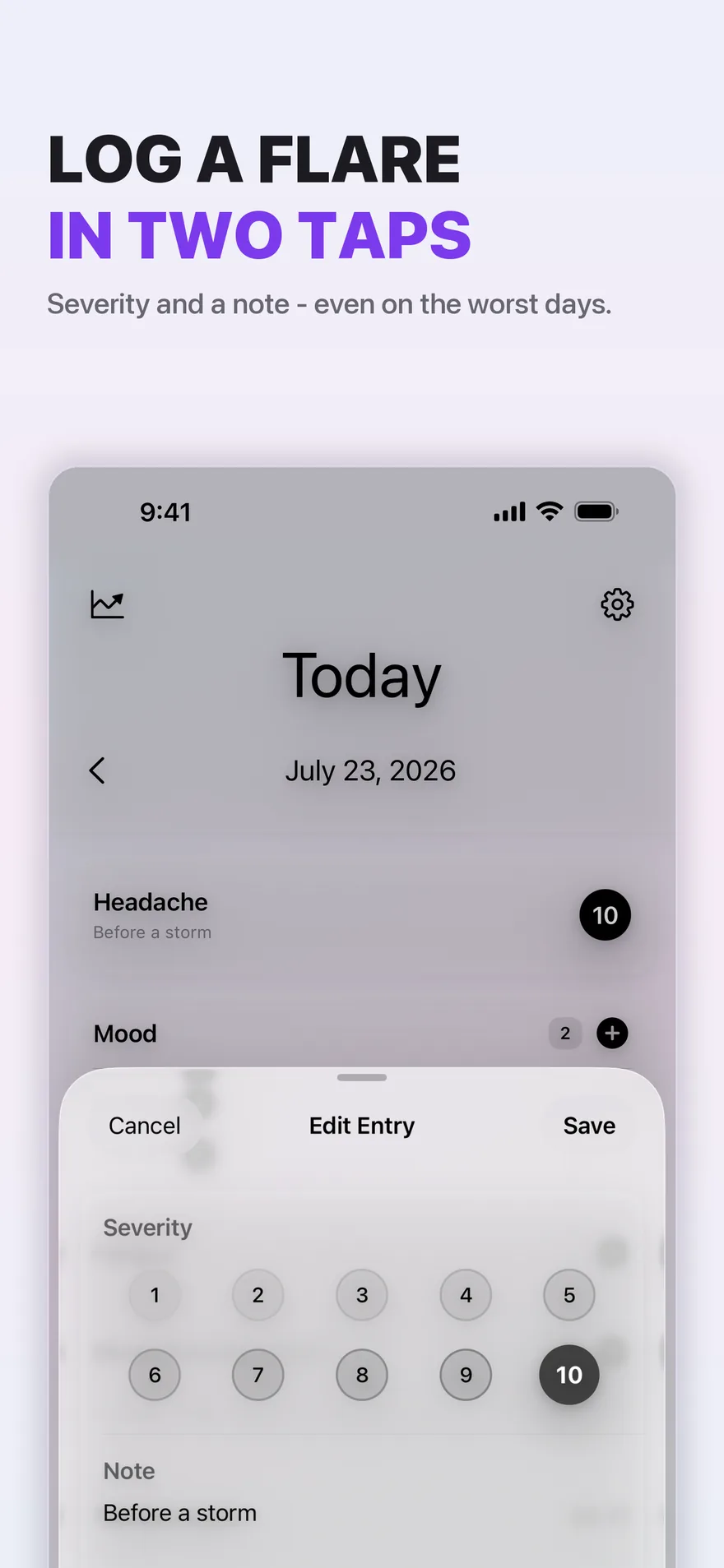
Log a flare in two taps
Severity 0–10, a number, or a simple yes/no — with an optional note. Designed for the days when everything is hard.
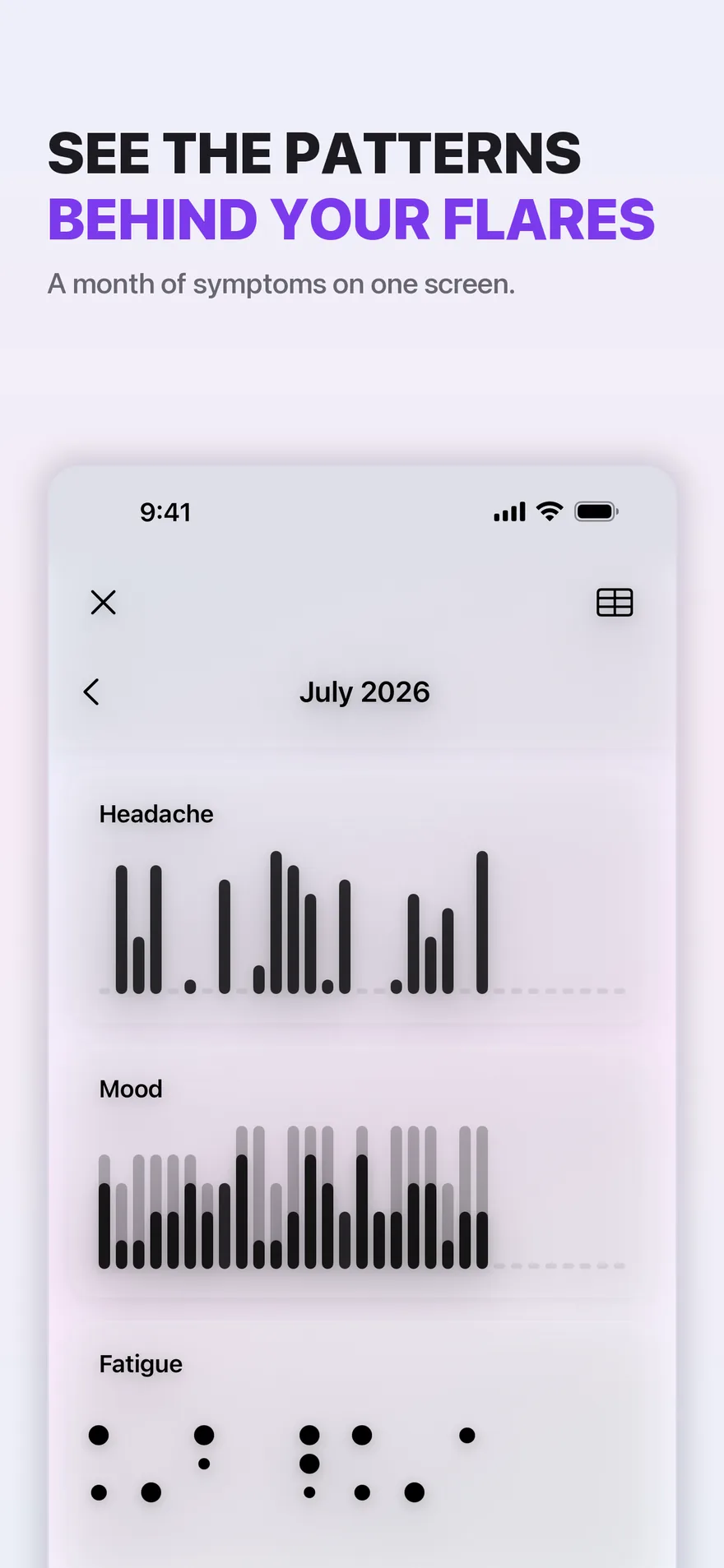
A month on one screen
Every metric as a clean monthly graph or table. Change over time is the whole point — so it's the default view.
Doctor-ready reports
Export your data as CSV free, or bring a month-at-a-glance PDF report (Premium) instead of scrolling a notes app in the waiting room.
Patterns (Premium)
Honest day-level associations from your own logs — what tends to show up together, or a day later. No causes claimed, ever.
Watch, widget & Health
Full Apple Watch app with complications, a Home Screen widget, and two-way Apple Health sync you control.
Private by architecture
No account, no server, no analytics. Your health data lives on your device — there is nothing for anyone to see.
Calm on the surface, thorough underneath
About 170 ready-made metrics across pain, gut, breathing, heart & vitals, sleep, skin, mood, cycle and habits — or track exactly the three you care about, free.
Guides: make your diary actually useful
Short, practical guides to symptom tracking — written for real flare weeks, not ideal ones.
How to start a symptom diary you'll stick with
The three decisions that make or break a diary, and a two-minute daily routine.
Read guide → AppointmentsShow your symptoms to your doctor
Turn months of entries into the five minutes that actually change a consultation.
Read guide → PatternsHow to find what triggers your flares
Why triggers hide a day or two behind the flare — and how to catch them honestly.
Read guide → MigraineKeeping a migraine diary
What to record beyond "headache: yes" so the neurologist has something to work with.
Read guide → FibromyalgiaTracking fibromyalgia flares
Pain, fatigue and brain fog move together — track them as a trio, not one number.
Read guide → IBSAn IBS diary that spots patterns
Symptoms, not just meals: the columns an IBS log needs to become useful.
Read guide → POTSTracking POTS day to day
Pair your heart-rate data from Apple Health with how the day actually felt.
Read guide → EndometriosisAn endometriosis pain diary
Cycle-aware pain tracking that makes invisible pain visible to clinicians.
Read guide →Questions people ask
Is Symp Trac really private?
Yes. There is no account and no server — every entry stays on your device (with optional sync to your own Apple Health). The developer cannot see your data even if he wanted to.
Is Symp Trac free?
The core diary is free with no ads: track up to three metrics with the current and previous month of history, and export your data as CSV. Premium unlocks unlimited metrics, full history, the doctor-ready PDF report and Patterns, with a 14-day free trial.
What can I track?
About 170 ready-made metrics across pain, digestion, breathing, heart and vitals, sleep, skin, mood and energy, cycle, habits and more — each as a 0–10 severity, a number, or a simple yes/no with an optional note.
Which conditions is it useful for?
People use symptom diaries for migraine, fibromyalgia, IBS, endometriosis, POTS, long COVID, MS, psoriasis, eczema and other long-running conditions — anywhere spotting change over time matters.
Does it work with Apple Health and Apple Watch?
Yes. Symp Trac reads and writes Apple Health data you approve, has a full Apple Watch app with complications, and a Home Screen widget for one-tap logging.
What is Patterns?
Patterns (Premium) looks for honest day-level associations in your own logs — for example whether worse sleep tends to be followed by a worse pain day. It needs about two weeks of overlapping entries and never claims causes, only what tends to show up together.
Your symptoms, finally in one calm place
Free to download. The core diary is free forever — no account, no ads.
